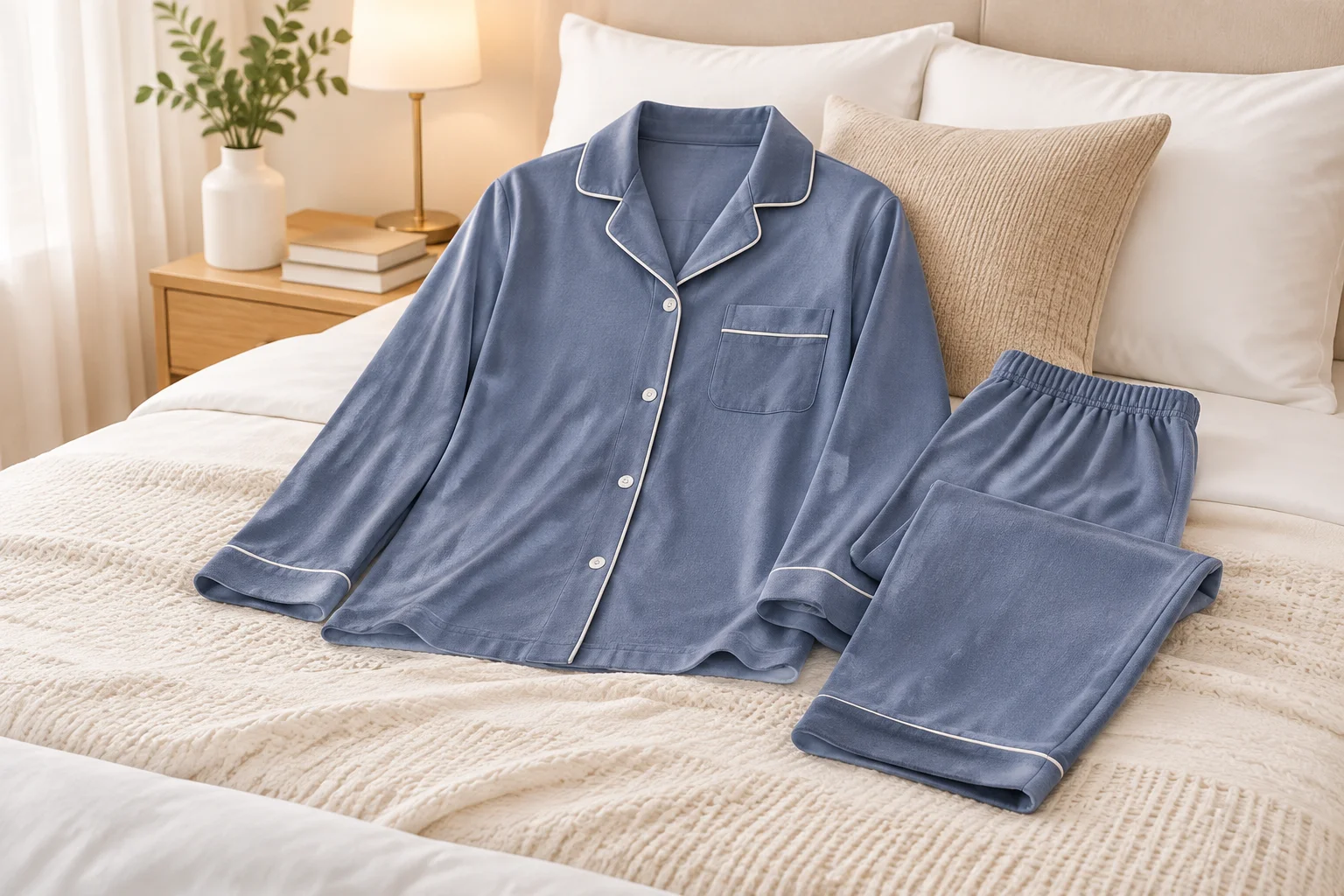
The Critical Link Between Fabric Science and Sustained Deep Sleep
Every night, the human nervous system undergoes delicate physiological shifts. The garments directly resting against your skin either facilitate thermal equilibrium or trap heat and moisture, subtly fracturing deep restorative slumber without your conscious awareness.
Thermoregulation and Nocturnal Core Temperature Drops
As evening transitions into nighttime, your body initiates a natural biological cooling process, lowering core temperature by approximately one to two degrees Fahrenheit to signal onset of melatonin production. High-grade sleepwear constructed from long-staple cotton, natural modal, or mulberry silk breathes effortlessly, allowing metabolic warmth to radiate freely outwards rather than reflecting heat back onto sensitive dermal layers.
Synthetic fabrics frequently trap moisture vapors, creating a humid microclimate beneath sheets and blankets. This trapped humidity prompts sudden shifts in perspiration rates, forcing the body to wake prematurely during deep slow-wave cycles. High-grade natural fibers continuously diffuse moisture, preserving steady baseline skin humidity throughout the entire eight-hour cycle.
Premium sleepwear functions as a calibrated microclimate buffer, eliminating the subconscious tactile and thermal spikes that quietly disrupt natural sleep architecture.
Noah Davis, Sleep Environment Specialist
Tactile Friction, Seam Engineering, and Sensory Rest
Physical restlessness in bed often stems directly from mechanical friction. Cheaply constructed pajamas with bulky overlock seams, tight armhole bands, or stiff elastic waistbands press against superficial nerve endings as you roll between sleep postures. Quality garments feature flat-felled stitches and generous seam margins, minimizing skin resistance against bedding.
- Elimination of micro-friction: Finely spun weaves slide naturally over sheets during tossing and turning, preventing involuntary arousal spikes.
- Unobstructed peripheral circulation: Soft stretch waistbands avoid pinching capillaries around the abdomen and lower lumbar zone.
- Hypoallergenic fiber surfaces: Natural weaves prevent contact dermatitis and itchy nocturnal irritation that cause recurring toss-and-turn episodes.
Investing in dedicated sleepwear that aligns with your specific room climate ensures sleep stages proceed through their natural progression without abrupt interruptions. Elevating fabric quality transforms sleep from fragmented physical recovery into deep, sustained revitalization.
Outline of Key Topics
-
Thermoregulation and Nocturnal Core Temperature Drops
Examining how natural textiles facilitate the circadian temperature decline necessary for entering and sustaining deep sleep.
-
Tactile Friction, Seam Engineering, and Sensory Rest
Understanding the mechanical impacts of seam construction and fabric glide in reducing nighttime micro-arousals.
-
Fabric Selection Guidelines for Optimal Recovery
Practical advice for selecting weights, cuts, and yarn types suited to individual sleep styles and seasonal conditions.
Questions & Answers
During slow-wave sleep, peripheral blood vessels dilate to release core heat into the immediate environment. Breathable natural fabrics like long-staple cotton and modal allow this heat to escape effortlessly, preventing overheating and nighttime awakenings.
Bulky stitching and constricting waistbands exert concentrated pressure on skin receptors during posture changes. Relaxed silhouettes and flat seams glide smoothly against sheets, maintaining steady sensory neutrality that protects REM stability.
Natural cellulose and protein fibers absorb vapor and release it into ambient air without becoming clammy against the body. Synthetic polyester blends, by contrast, repel vapor, trapping moisture on the skin and prompting rapid cooling shocks that wake you.