Preserving Natural Luster and Protein Fibers
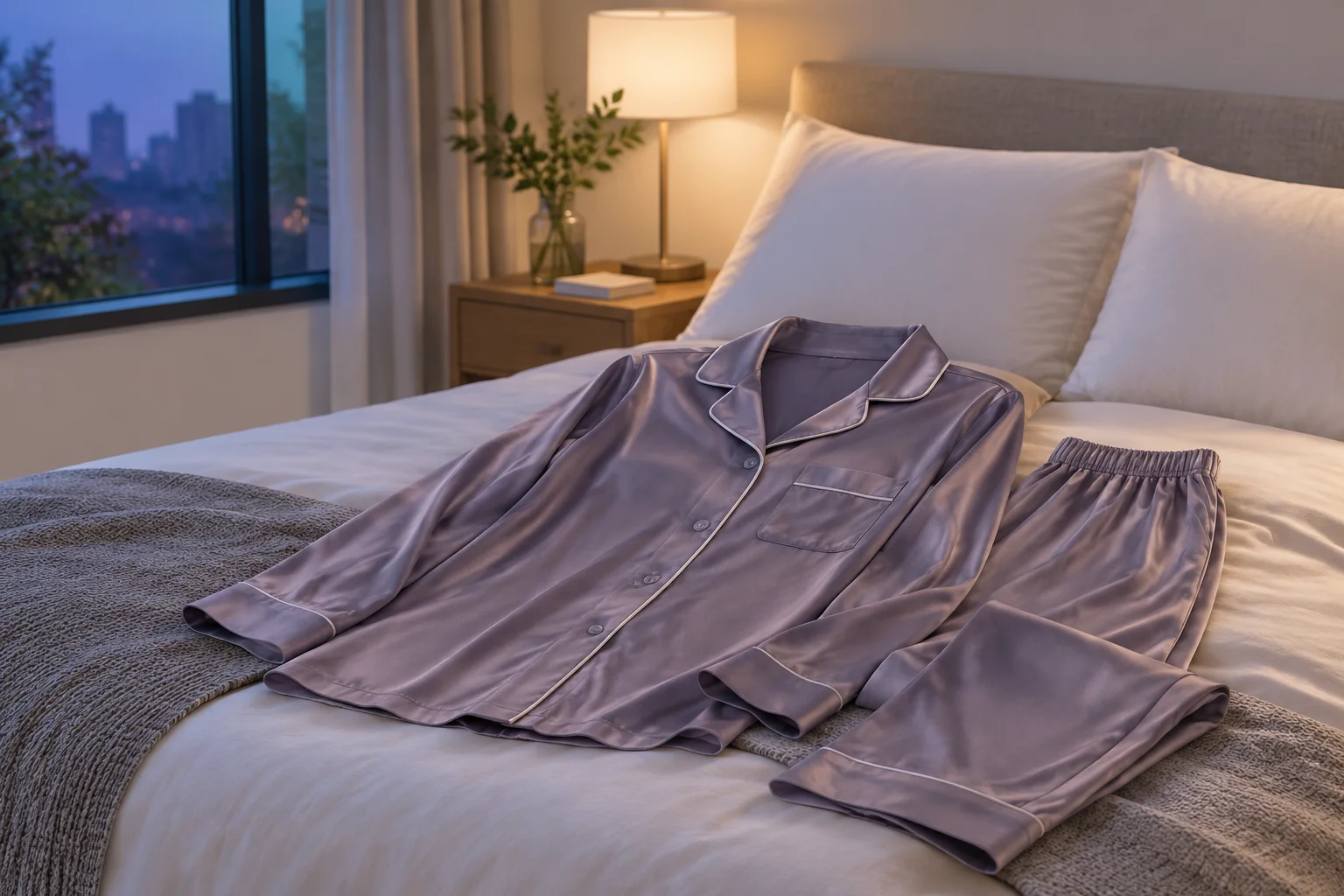
Mulberry silk sleepwear requires gentle handling to protect its delicate amino acid bonds. Simple temperature controls, neutral detergents, and air-drying ensure your nightwear retains its natural thermoregulation and fluid drape for years.
Gentle Cleansing Principles for Natural Silk
Silk is a natural protein fiber produced by silkworms, sharing properties closer to hair than synthetic polyester or sturdy plant cotton. When submerged in harsh conditions, hot water, or heavy alkaline laundry chemicals, silk fibers denature rapidly. This breakdown leads to brittle fibers, surface fuzziness, and loss of shimmering sheen. Maintaining your sleepwear starts with cold or lukewarm water never exceeding 30 degrees Celsius and choosing a pH-neutral liquid formulated strictly for silk and wool.
Hand washing in a spotless wash basin remains the gold standard for delicate chemises, robes, and pyjama trousers. Submerge the garment into diluted wash water, gently swirling it for no longer than three to four minutes. Avoid rubbing the fabric vigorously against itself, twisting the seams, or scrubbing concentrated spots with fingernails. Rinse thoroughly in clean cold water until every trace of lather dissipates, keeping the weave relaxed throughout the rinse cycle.
Silk retains moisture balance next to your skin through natural sericin and amino acids. Treating the garment gently safeguards those exact wellness qualities night after night.
Olivia Brown, Sleepwear Textile Specialist
Proper Drying, Ironing, and Wardrobe Storage
The primary risk of permanent fabric damage occurs while silk is wet and its tensile strength temporarily drops. Never wring or squeeze silk sleepwear. Instead, spread the freshly rinsed piece flat over a thick, absorbent white cotton towel, gently roll the towel into a cylinder, and press softly to extract excess moisture without stretching delicate seams.
- Always dry flat on a clean drying rack away from direct sunshine, hot radiators, and furnace vents.
- Iron only while the garment is slightly damp using the lowest silk heat setting on the inside face of the fabric.
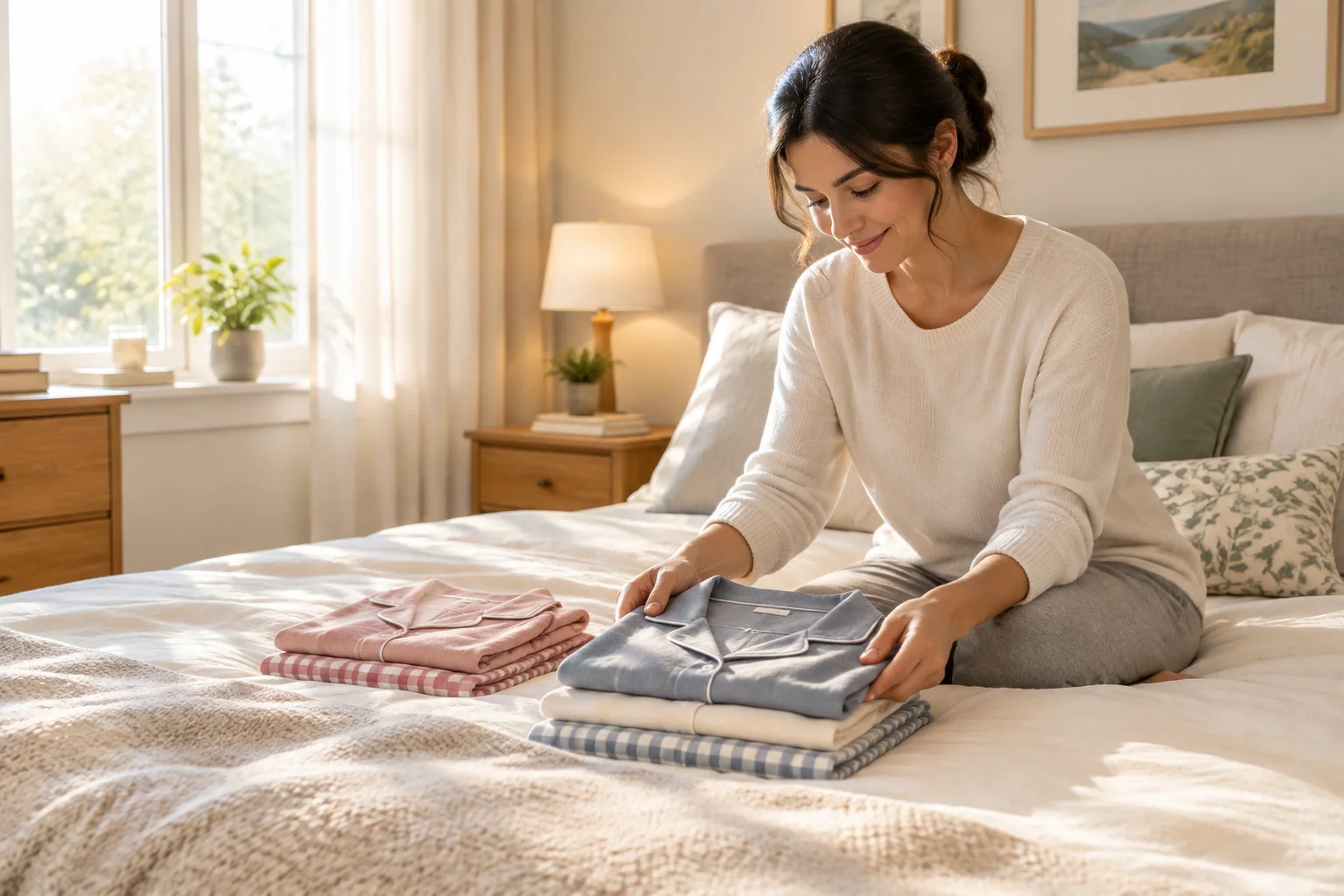
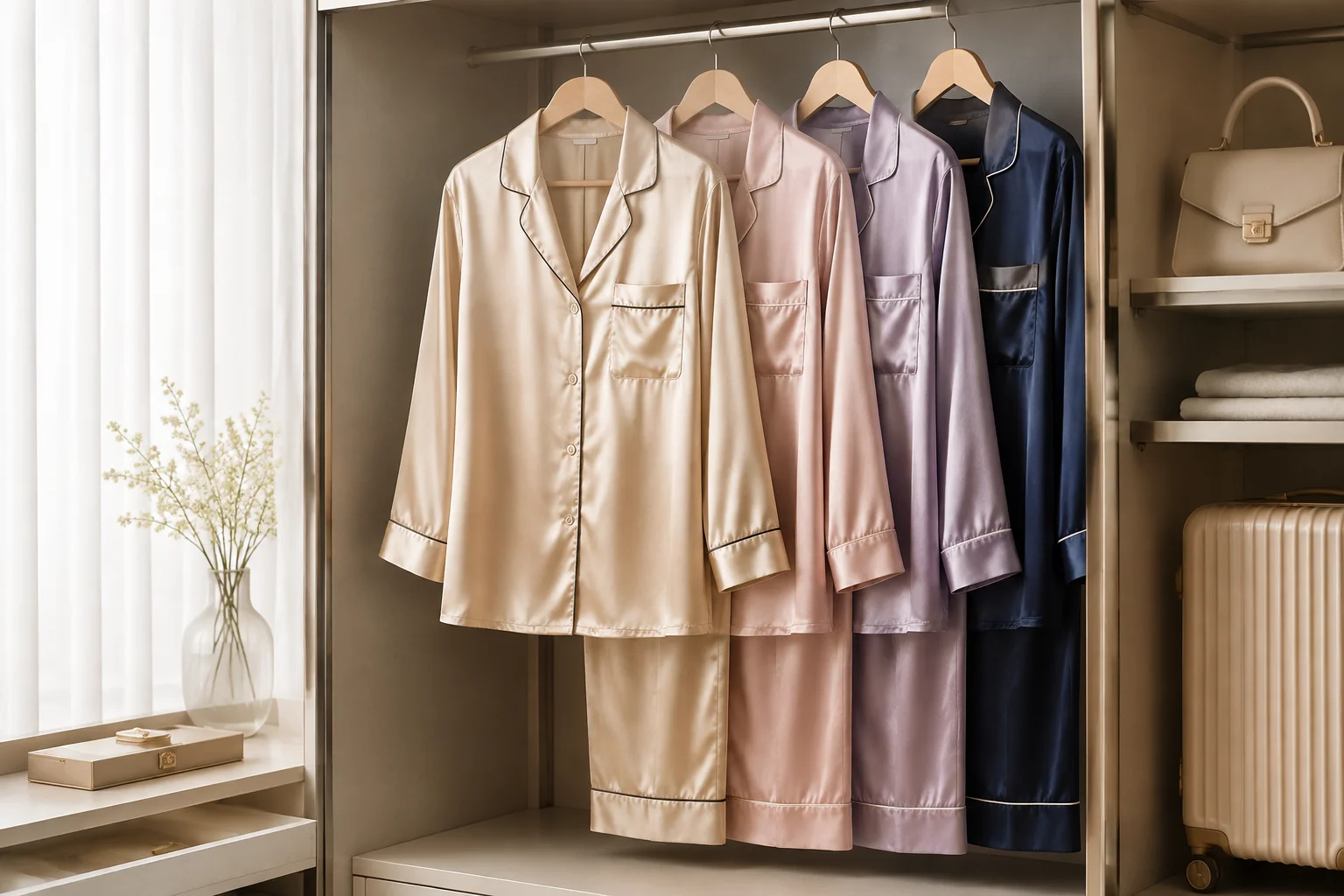
- Store hung on broad padded hangers or loosely folded inside breathable cotton garment bags away from cedar oils.
Storing silk garments properly prevents friction marks and moth interest during warmer seasons. Plastic dry-cleaning bags trap humidity and cause fiber yellowing, so always choose breathable cotton or linen storage pouches. Keep perfumes, alcohol-based body lotions, and hair styling sprays well away from the fabric during your nighttime routine to keep the surface pristine.
Outline of Key Topics
-
Hand Washing and Detergent Rules
Optimal water temperatures, neutral pH detergents, and gentle washing mechanics.
-
Drying Techniques and Towel Rolling
Moisture extraction without twisting, preventing optical bleaching and fiber stiffness.
-
Steaming, Pressing, and Safe Storage
Temperature thresholds for ironing and preserving garments between wearings.
Questions & Answers
Yes, provided you place the garment inside a fine mesh laundry bag and select a delicate or silk cycle with cold water below 30 degrees Celsius. Keep the spin cycle at the lowest possible RPM (400–600 RPM) to prevent friction creasing.
Dab fresh spots immediately with a dry microfiber cloth rather than rubbing. Treat stubborn marks with a drop of diluted pH-neutral silk wash and lukewarm water, then wash the entire garment so uneven water marks do not form.
Air drying in dry indoor environments can leave the surface momentarily crisp. Gentle steaming or a light press on the reverse side with a low-temperature iron instantly reactivates the supple hand feel.