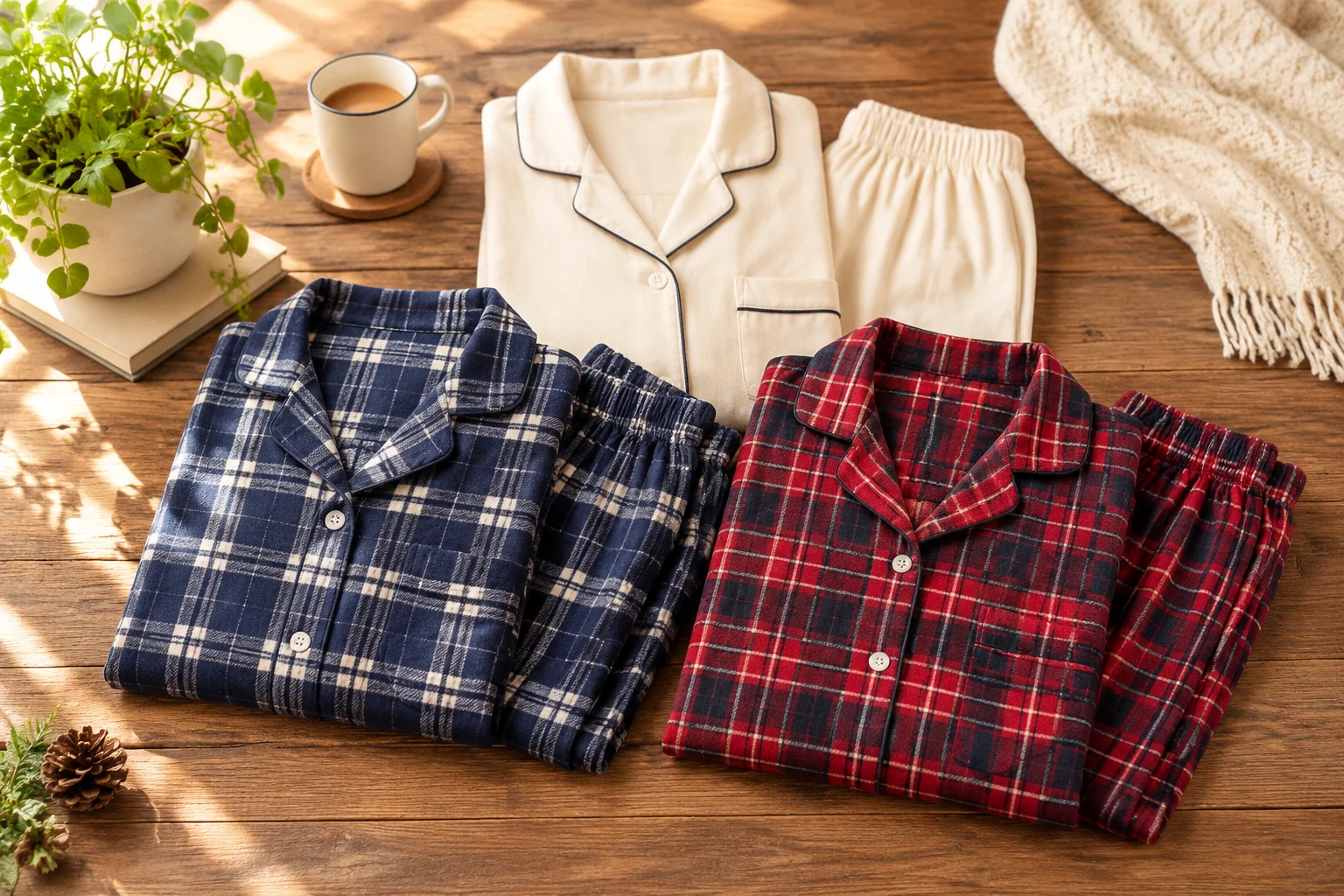
Harmonizing Nightwear with Transitional Weather
Navigating unpredictable night conditions during early spring or mid-autumn demands more than simply swapping thin shorts for heavyweight flannel. A nuanced approach pairs moisture management with adaptable layers to preserve uninterrupted REM sleep.
Why Microclimates Dictate Restful Sleep
Human internal body temperature drops by roughly one to two degrees Fahrenheit during the onset of deep slumber. When outdoor weather shifts between seasons, household heating and insulation systems frequently misalign with outdoor chill, producing sudden overnight spikes or sharp dips in room ambient temperature.
Wearing uniform sleepwear through these unpredictable transitions inevitably leads to sudden awakenings. If pajamas trap excessive humidity, perspiration cools rapidly against the epidermis and triggers shivering; conversely, fabrics that lack adequate thermal retention leave extremities chilled before the early morning hours arrive.
Restorative rest relies on thermal equilibrium. Sleepwear that breathes naturally allows the body to release excess heat while preserving a gentle buffer against sudden room drafts.
Ava Wilson, Textile Research Associate
Practical Tactics for Seasonal Wardrobe Adjustments
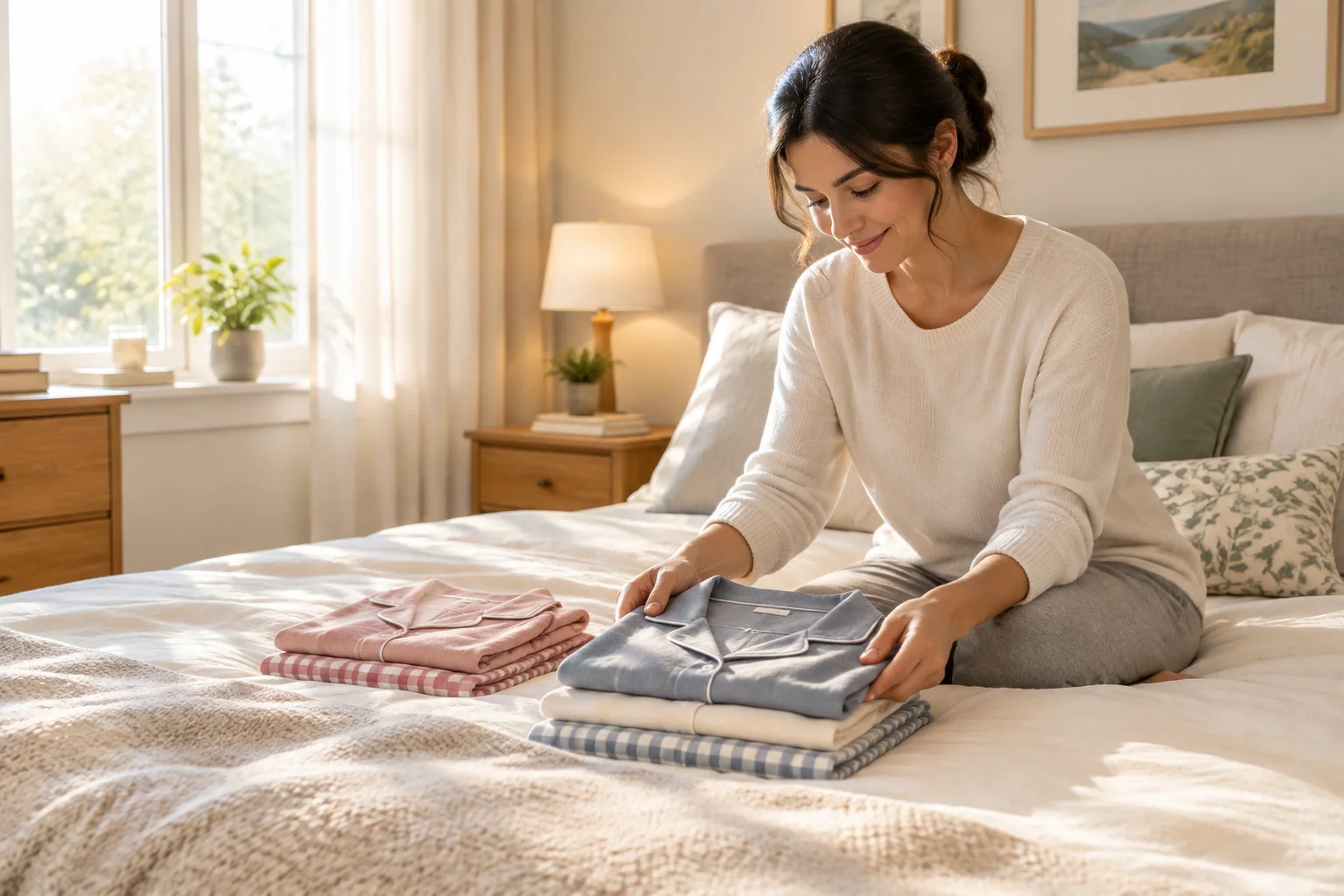
Adapting your nighttime clothing requires intentional fiber selection and modular configurations rather than abrupt seasonal overhauls. Introducing transitional pieces maintains consistent rest without overwhelming your storage space.
- Adopt medium-weight combed cotton tops paired with relaxed shorts or lightweight lounge pants for late-spring evenings.
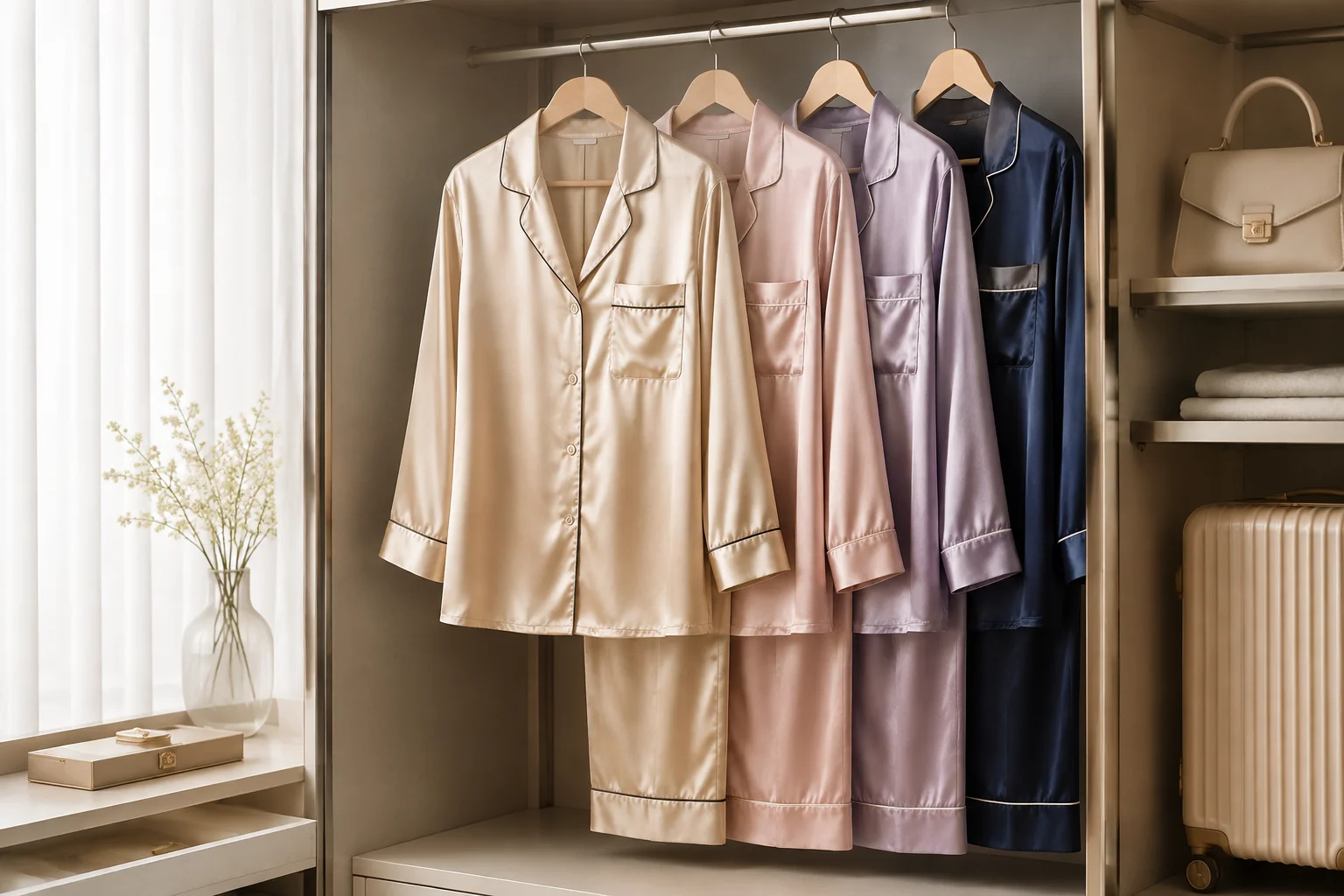
- Incorporate silk or fine modal layers during autumn transitions to retain gentle warmth while wicking away latent sweat.
- Utilize open robes with clean wrap ties to manage evening lounge warmth before stepping into bed.
By pairing versatile separates and prioritizing breathable plant or animal fibers over synthetic blends, you build a resilient sleep system capable of handling unexpected cold snaps or lingering heat waves effortlessly.
Outline of Key Topics
-
Understanding Sleeping Microclimates
The biological necessity of steady core temperatures and how transitional seasons disrupt baseline thermal comfort.
-
Material Selection Across Intermittent Weather
Examining why modal, lightweight silks, and medium-gauge cotton weaves outshine heavy synthetics.
-
Modular Layering for Uninterrupted Cycles
Creating versatile combinations using loose pants, soft vests, and adaptable robes for fluctuating bedroom temperatures.
Questions & Answers
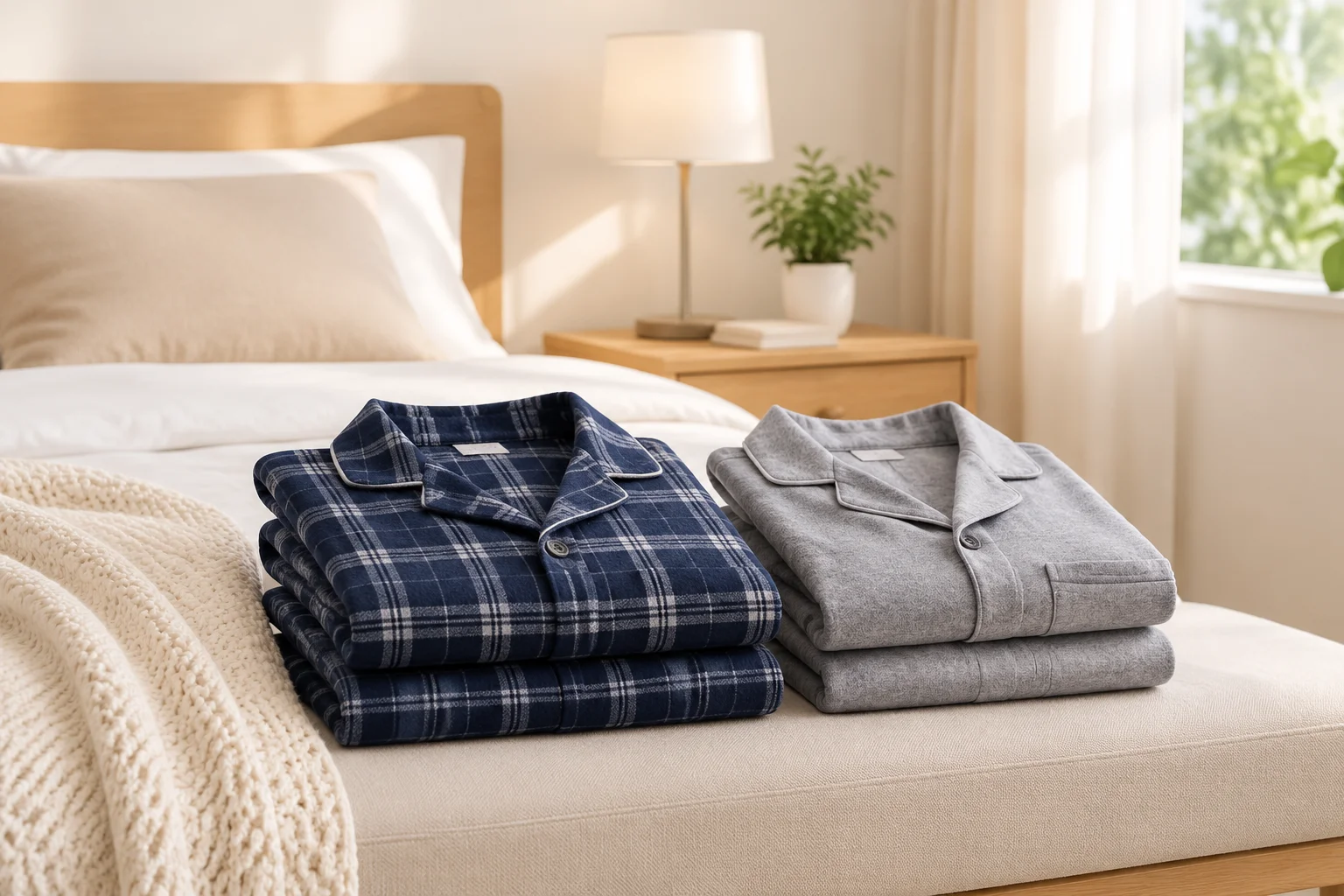
Store dense flannel once bedroom overnight temperatures consistently stay above 62°F (17°C). Continuing with heavy brushed flannel in mild weather traps excessive humidity and disrupts the REM stage.
Yes. Mulberry silk is naturally thermoregulating. Its protein fibers create a breathable insulating barrier when cold while allowing body vapor to escape smoothly during sudden warm nights.
Pair lightweight long cotton trousers with a short-sleeve top, and keep a soft drape robe within arm's reach. This configuration insulates limbs without overheating your torso.